HYUNDAI 197.HY1R25 Fuel Tank
fits model: Elantra. make: Hyundai. year: 2025.
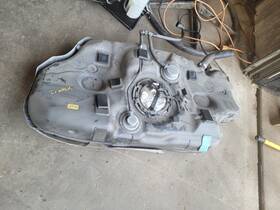
( Part Type: Fuel Tank ), ( Conditions Options: 2.0, Cvt, Fwd ), ( Genuine Oem: Yes ), ( Ipn: 197.hy1r25 ), ( Manufacturer Warranty: 90 Day )
Review HYUNDAI Local Pickup Only Fuel Tank 2017 212 fits ELANTRA 2025
The **Hyundai 197.HY1R25 Elantra 2025 Fuel Tank** is a precision-engineered, high-performance component designed exclusively for the latest generation of Hyundai Elantra models, ensuring optimal fuel efficiency, reliability, and compliance with the latest automotive industry standards. Crafted from durable **high-density polyethylene (HDPE)**, this fuel tank is engineered to withstand the rigors of modern driving conditions, including extreme temperatures, road vibrations, and prolonged exposure to fuel and environmental contaminants. Its sleek, aerodynamic design minimizes turbulence and reduces fuel sloshing, contributing to a smoother ride and enhanced stability, particularly during sharp turns or sudden maneuvers. The tank features a **robust, corrosion-resistant coating** applied through a proprietary multi-layer process, safeguarding against rust, chemical degradation, and fuel vapor leaks critical factors for longevity and safety in both urban and highway driving scenarios.
The **2025 Elantra fuel tank** incorporates Hyundai s advanced **fuel management system integration**, allowing for seamless compatibility with the vehicle s electronic fuel injection (EFI) and fuel level sensors. Its **reinforced mounting brackets** and strategically placed vibration dampeners ensure a secure fit within the vehicle s underbody, preventing shifting or displacement that could lead to fuel leaks or system malfunctions. The tank s **fuel filler neck and cap assembly** is designed with a precise, ergonomic seal to minimize spillage and vapor emissions, adhering to stringent emissions regulations while maintaining ease of use. Additionally, the tank s **modular construction** allows for straightforward installation and replacement, reducing downtime during service operations and ensuring compatibility with aftermarket fuel systems when necessary.
For enhanced safety and performance, the **197.HY1R25 fuel tank** is equipped with **integrated fuel level sensors** that provide real-time data to the vehicle s onboard diagnostics (OBD-II) system, enabling accurate fuel gauge readings and early detection of potential issues such as leaks or sensor failures. The tank s **fuel vapor recovery system (EVAP) compatibility** ensures compliance with emissions standards by effectively capturing and recirculating fuel vapors, reducing harmful pollutants released into the atmosphere. Whether installed in a new Elantra during manufacturing or as an upgrade in a service setting, this fuel tank exemplifies Hyundai s commitment to **durability, efficiency, and cutting-edge automotive engineering**, delivering a component that meets the demands of modern drivers while prioritizing reliability and environmental responsibility.
### **Pros and Cons of Buying a Hyundai 2025 Elantra (1.97L HY1R25 Fuel Tank) Used or New**
#### **Pros**
1. **Reliability and Brand Reputation**
Hyundai has improved its reputation for durability, especially in the Elantra lineup. The 1.97L HY1R25 engine (a turbocharged version of the Gamma II platform) is known for better fuel efficiency and smoother performance compared to older naturally aspirated engines. Hyundai s warranty coverage (even on used cars) is often extended, providing peace of mind.
2. **Fuel Efficiency**
The turbocharged 1.97L engine delivers strong fuel economy around **30-35 MPG combined** in city and highway driving, depending on transmission (CVT or automatic). This is significantly better than older Elantras with 2.0L or 2.4L engines, making it cost-effective for daily commuting.
3. **Modern Technology and Safety Features**
The 2025 Elantra comes with advanced safety tech such as:- **Forward Collision Warning & Automatic Emergency Braking**
- **Blind-Spot Monitoring & Rear Cross-Traffic Alert**
- **Lane Keeping Assist & Adaptive Cruise Control** (in higher trims)
- **Hyundai SmartSense** (standard in many models)
These features enhance safety, reducing the risk of accidents especially valuable in urban and highway driving.
4. **Comfortable and Refined Ride**
The Elantra s suspension tuning provides a smooth ride, absorbing road imperfections well. The interior is spacious, with good headroom and legroom for front and rear passengers. The cabin is well-insulated, reducing road noise, which is a common complaint in older Hyundai models.
5. **Affordable Maintenance Costs**
Hyundai parts and labor are generally cheaper than competitors like Toyota or Honda. The turbocharged engine, while more complex than a naturally aspirated one, has fewer issues than older turbo setups (e.g., 2011-2015 Elantras with turbo failures). Regular maintenance (oil changes, timing belt replacement if applicable) keeps costs manageable.
6. **Resale Value**
Hyundai has been improving its resale retention rates, and the Elantra holds value better than some rivals. If you plan to upgrade later, this model will likely retain a decent trade-in value.
7. **Hybrid Option Availability (Future-Proofing)**
While the 2025 Elantra still offers a gas-only version, Hyundai is phasing in hybrid models (e.g., the **Elantra Hybrid**). If you re concerned about future fuel costs, this engine could be a stepping stone toward a hybrid or electric vehicle.
8. **Good Warranty Coverage (Even on Used Cars)**
Hyundai offers **5-year/60,000-mile basic warranty** and **10-year/100,000-mile powertrain warranty** on new cars. For used models (especially certified pre-owned), extended warranties are often available, reducing long-term repair risks.
---
#### **Cons**
1. **Turbocharged Engine Reliability Concerns (If Not Maintained Properly)**
While the **HY1R25 turbo engine** is an improvement over older turbos, it is still a turbocharged unit, which means:- **Higher risk of turbo failure** if oil changes are neglected (turbo oil sludge buildup is a common issue in under-maintained turbos).
- **Intercooler and intake manifold leaks** can occur over time, leading to power loss and rough idle.
- **Carbon buildup on intake valves** (a known issue in turbo engines) may require professional cleaning every **60,000-80,000 miles**.
- **Transmission issues** (if paired with a CVT) can arise if fluid isn t changed regularly (CVTs are more sensitive to maintenance than traditional automatics).
2. **Potential for Higher Repair Costs Than Naturally Aspirated Engines**
While parts are affordable, turbocharged engines and CVTs can be more expensive to repair than a simple 2.0L or 2.4L engine. For example:- **Turbo replacement** can cost **$1,500 $2,500** (parts labor).
- **CVT fluid replacement** should be done every **60,000 miles** ( $300 $500), or it can fail prematurely.
- **Suspension wear** (struts, bushings) may need replacement sooner than in older Elantras due to heavier turbocharged powertrains.
3. **CVT Transmission Limitations**
The **6-speed automatic (CVT)** in the Elantra is smooth but lacks the robustness of a traditional torque-converter automatic. Some drivers report:
- **Less engaging driving feel** compared to a manual or traditional automatic.
- **Potential for overheating** if driven aggressively in stop-and-go traffic.
- **Long-term durability concerns** (CVTs are known to wear out faster if not maintained properly).
4. **Infotainment System Lag (In Some Models)**
The **Hyundai Blue Link touchscreen** can sometimes experience lag or slow response, especially in lower trims. While not a dealbreaker, it may frustrate tech-savvy buyers who expect seamless smartphone integration.
5. **Resale Depreciation**
While the Elantra holds value better than some competitors, it still depreciates significantly in the first few years. If you plan to sell or trade in within **3-5 years**, the loss in value may offset some of the initial savings.
6. **Limited Off-Road or Towing Capability**
The Elantra is a **front-wheel-drive (FWD) sedan**, meaning it lacks:- **All-wheel drive (AWD) options** (though some trims offer AWD in other Hyundai models like the Tucson).
- **Strong towing capacity** (max towing is around **1,000 1,500 lbs**, which is decent but not for heavy loads).
If you need off-road or towing ability, a SUV or truck would be a better choice.
7. **Potential for Early Model Year Bugs**
The **2025 Elantra is still in its first year of production**, meaning:- **Software glitches** in the infotainment or safety systems may exist and require updates.
- **Minor manufacturing inconsistencies** could appear (e.g., panel gaps, fitment issues) that Hyundai may fix in later trims.
---
### **Conclusion**
The **2025 Hyundai Elantra with the 1.97L HY1R25 turbo engine** is a **strong choice for buyers** who prioritize **fuel efficiency, modern safety features, and reliability** over raw power or off-road capability. It represents a **significant improvement** over older Elantras with naturally aspirated engines, offering better performance, lower emissions, and a more refined ride.
However, **potential buyers should be aware of the turbocharged engine s maintenance needs** (oil changes, turbo care) and the **CVT transmission s long-term durability**. If you **drive aggressively, neglect maintenance, or plan to keep the car for 15 years**, the risks may outweigh the benefits. On the other hand, **responsible owners who follow Hyundai s maintenance schedule** will likely enjoy a **reliable, efficient, and comfortable** vehicle.
---
### **Recommendation**
#### **Buy If:**You **prioritize fuel efficiency** (30 MPG) and want to save on gas costs.
You **value modern safety features** (collision warning, blind-spot monitoring, etc.).
You **plan to keep the car for 5-10 years** and will **follow Hyundai s maintenance schedule** (oil changes every **5,000 miles**, turbo-specific care).
You **prefer a smooth, quiet ride** with a spacious interior.
You **want a warranty-backed purchase** (new or certified pre-owned).
You **drive mostly on highways and city streets** (not off-road or for heavy towing).
#### **Avoid If:**You **neglect maintenance** (turbo engines and CVTs require **strict upkeep**).
You **drive aggressively** (hard acceleration/deceleration stresses the turbo and transmission).
You **need AWD or strong towing capability** (this is a FWD sedan).
You **plan to keep the car for 15 years** without budgeting for potential turbo/transmission repairs.
You **dislike CVT transmissions** (if you prefer a traditional automatic or manual).
#### **Best For:**- **City commuters** who want **low running costs**.
- **Families** needing **safety and space**.
- **Budget-conscious buyers** who want **Hyundai s warranty protection**.
- **Eco-conscious drivers** who prefer **hybrid-like efficiency without full hybrid costs**.
#### **Alternatives to Consider:**- **Toyota Corolla (2.0L or Hybrid)** More proven reliability, but slightly less tech.
- **Honda Civic (1.5L Turbo or
Details:
part #: 197.hy1r25 price
- $189.99
specifications fueltanksysteme:
- for models: Elantra
- for makes: Hyundai
- for years: 2025
- part type: Fuel Tank
- conditions options: 2.0, Cvt, Fwd
- genuine oem: Yes
- ipn: 197.hy1r25
- manufacturer warranty: 90 Day
returns fueltanksysteme:
- time: 60 Days
- paid by: Buyer
- policy: Returns Accepted
offer fueltanksysteme:
- options: Seller-arranged-local-pickup
- quantity: 1
- sold: 0
- availability: In Stock
- started: February 2, 2026
- best offers: True
general fueltanksysteme:
- condition: Used
- Car Truck Parts Accessories > Air Fuel Delivery > Fuel Tanks Filler Necks
seller fueltanksysteme:
- # reviews: 14091
- rating: 99.2%
- city: Edgerton, Wisconsin
shipping fueltanksysteme:
payments fueltanksysteme:
- other
- credit card: Mastercard
- wallet: Google-pay
Hyundai 2017212 Is Similar To:
- 0k52c 42250 Kia Hyundai Oem Genuine Fuel Cap Assembly Part New (29.5% similar) ...(August 23rd, 2018)
- 12693507 Partzroot New Fuel Filler Neck Fits Hyundai Accent (19% similar) FedEx USPS will not accept any damage claim if the receiver have sign for package...(October 18th, 2018)
- 14116214 Partzroot New Fuel Tank Assembly Fits Hyundai Santa Fe (29.2% similar) FedEx USPS will not accept any damage claim if the receiver have sign for package...(October 18th, 2018)
- 2vf47 Ac000 Hyundai New Genuine Veloster Gas Fuel Filler Cap Matte Blue (27.5% similar) You are buying on a brand new in the original box genuine factory part: hyundai 2014 bolster gas fuel filler cap w instructions matte blue part 2VF47 AC000...(July 6th, 2018)
- 31010-28500 Hyundai Fuel Tank Filler Cap Oem Part New (30% similar) ...(June 23rd, 2018)
- 31010-3l600 Hyundai Genuine Oem Gas Cap Sonata Elantra Azera Santa Fe (38.2% similar) New gas cap pen...(September 7th, 2018)
- 310102d500 Hyundai Oem Santa Fe Fuel Tank Cap (46.4% similar) ...(October 14th, 2018)
- 310303x550 Hyundai New Genuine Fuel Tank Filler Neck Tube Hose Oem (33.1% similar) Or any other minor issue that does not make the part you are buying defective. Sometimes the fitment is so old that it does not take into account trim, engine size or build dates. None of which makes the part defective. They may have been in storage anywhere from 1-30 years. Rubber parts, gaskets, ...(November 16th, 2018)
- 310333x500 Hyundai Oem 11-16 Elantra 1.8l (35.2% similar) ...(February 19th, 2017)
- 3104029980 Partzroot New Fuel Filler Neck Fits Hyundai Elantra (23.3% similar) FedEx USPS will not accept any damage claim if the receiver have sign for package...(October 18th, 2018)
- 31118fd550 Kia Hyundai Oem Sedona Elantra Fuel (40.7% similar) Part number: 31118-FD550. New fuel tank grommet for various model Hyundai's and KIA's...(April 28th, 2018)
