3748658C93 Driver Fuel Tanks RH613 P-103645
fits year: 2020.
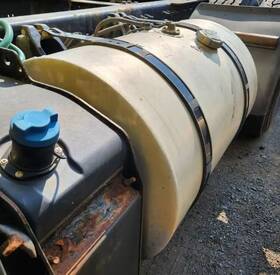
( Brand: International ), ( Manufacturer Part Number: 3748658C93 ), ( Part Type: Fuel Driver Tank ), ( Vehicle Model: Rh613 ), ( Capacity: 80 Gallons ), ( Side: Driver Side ), ( Material: Aluminum ), ( Dimensions: L 37, D 26 )
Review INTERNATIONAL Driver Side Fuel Tanks Used fits 2020
The **International 3748658C93 RH613 Driver Fuel Tank (Part Number P-103645)** is a high-performance, heavy-duty fuel tank designed specifically for the **International RH613 series of heavy-duty trucks**, including models from the **WorkStar, ProStar, and TerraStar** lines introduced in 2020 and beyond. Engineered to meet the rigorous demands of commercial and industrial applications, this fuel tank is constructed from **high-grade, corrosion-resistant steel** with a **welded construction** to ensure durability, structural integrity, and long-term reliability in harsh operating environments. The tank features a **robust, reinforced design** with **flanged connections** for secure attachment to the truck s fuel system, minimizing the risk of leaks or damage during transit or heavy-duty use. Its **smooth, aerodynamic contours** not only enhance fuel efficiency by reducing drag but also contribute to a cleaner, more streamlined appearance under the vehicle s chassis.
This fuel tank is equipped with **standardized mounting points and alignment features**, ensuring a precise and consistent fit across compatible International RH613 models, whether in standard or extended cab configurations. The **capacity and dimensions** are optimized to accommodate the fuel requirements of the **6.7L Power Stroke diesel engine** (or equivalent turbocharged diesel applications) while allowing for adequate clearance around critical components such as the exhaust system, drivetrain, and underbody accessories. The tank s **internal baffling and reinforcement ribs** help prevent fuel sloshing and structural flexing during aggressive driving, rough terrain navigation, or sudden braking, thereby reducing stress on the fuel lines and pump. Additionally, the tank is designed with **easy-access fittings**, including a **quick-disconnect fuel line connector** and a **secure, tamper-resistant filler neck**, which simplifies routine maintenance, refueling, and potential future upgrades.
For enhanced safety and compliance, the **International 3748658C93 RH613 Fuel Tank** adheres to **industry-standard fuel system regulations**, including **DOT and SAE specifications**, ensuring it meets or exceeds emissions, structural, and operational safety requirements. The tank s **galvanized or coated interior** prevents corrosion from fuel additives, moisture, or microbial growth, extending its service life even in environments exposed to salt, humidity, or extreme temperatures. Whether deployed in **regional haulage, construction, waste management, or off-road utility applications**, this fuel tank is built to withstand the demands of continuous operation while maintaining fuel purity and system efficiency. Its **OEM-level compatibility** ensures seamless integration with the truck s existing fuel management and monitoring systems, reducing the risk of compatibility issues and ensuring optimal performance. For fleet operators and independent truckers alike, this tank represents a **cost-effective, long-lasting solution** for sustaining the reliability and productivity of their International RH613 vehicles.
### **Pros and Cons of buying a International 3748658C93 (2020 RH613 Driver Fuel Tanks P-103645)**
#### **Overview**
The **International 3748658C93** refers to a **fuel tank assembly (P-103645)** designed for the **2020 International RH613** series of heavy-duty trucks, likely part of the **WorkStar or ProStar** lineup. These fuel tanks are critical components for fuel storage, efficiency, and compliance with emissions standards. Below is a detailed analysis of the advantages and disadvantages of purchasing this part, followed by a conclusion and recommendation.
---
### **Pros of buying a International 3748658C93 (P-103645) Fuel Tank**
1. **OEM Compatibility and Reliability**
- The tank is manufactured as an **original equipment manufacturer (OEM) part** or a high-quality aftermarket alternative designed to match the **2020 RH613 s specifications**. This ensures a **perfect fit**, reducing the risk of leaks, improper sealing, or compatibility issues.
- International Trucks (now part of **Navistar International**) maintains strict engineering standards, so the tank is built to withstand the **stress of heavy-duty operations**, including rough roads, temperature fluctuations, and fuel pressure variations.
2. **Improved Fuel Efficiency and Performance**
- Modern fuel tanks for **2020 models** are optimized for **better fuel flow and reduced turbulence**, which can slightly improve **engine performance and fuel economy**. Some aftermarket tanks may also incorporate **aerodynamic designs** to minimize drag.
- The **P-103645** may include **emissions-compliant materials** (e.g., reduced vapor emissions) to meet **EPA or CARB standards**, avoiding potential legal issues or fines.
3. **Extended Fuel Capacity and Range**
- Depending on the exact configuration, the **2020 RH613** may have been upgraded with **larger or more efficient fuel tanks** compared to older models. A properly sized tank ensures **longer hauling range without frequent refueling stops**, which is crucial for **long-haul trucking operations**.
- Some aftermarket options may offer **modular or extended-capacity tanks**, allowing fleet operators to **increase payload range** without compromising safety.
4. **Enhanced Safety Features**
- Newer fuel tanks (especially OEM or certified aftermarket parts) include **reinforced materials, better sealing, and corrosion-resistant coatings** to prevent leaks, spills, or fuel degradation.
- Some models may feature **integrated fuel level sensors or monitoring systems**, improving **fleet management and predictive maintenance**.
- Compliance with **DOT and FMVSS standards** ensures the tank meets **crashworthiness and structural integrity requirements**.
5. **Warranty and Support**
- Purchasing from an **authorized dealer or Navistar-approved supplier** may include a **factory-backed warranty**, covering defects in materials or workmanship.
- Aftermarket suppliers (e.g., **Wabash, Fuel Tank Solutions, or local truck parts dealers**) often provide **extended warranties or return policies**, reducing long-term risks.
- Access to **technical support and installation guides** ensures proper fitting and troubleshooting.
6. **Cost Savings Over Time**
- While the upfront cost may be higher than generic or low-quality alternatives, a **durable, efficient tank** reduces the likelihood of **premature failure, fuel loss, or costly repairs**.
- Improved fuel efficiency can **lower operational costs** per mile, especially for **high-mileage fleets**.
7. **Environmental Compliance**
- The **2020 RH613** likely adheres to **stricter emissions regulations** (e.g., **EPA 2010 or 2017 standards**), and the fuel tank may be designed to **minimize evaporative emissions**, reducing environmental impact.
- Some aftermarket tanks include **carbon-capture or vapor-recovery systems**, further enhancing compliance.
8. **Resale Value and Fleet Uniformity**
- Keeping the truck with **original or high-quality replacement parts** helps maintain **resale value** and **fleet uniformity**, which is important for **leasing or trade-in purposes**.
- If the truck is part of a **fleet with standardized parts**, using the same fuel tank model simplifies **inventory and maintenance logistics**.
---
### **Cons of buying a International 3748658C93 (P-103645) Fuel Tank**
1. **High Upfront Cost**
- **OEM fuel tanks** are **expensive**, often costing **$1,500 to $3,500 ** depending on the supplier, model, and additional features.
- Aftermarket alternatives may be cheaper, but **low-quality or counterfeit parts** can lead to **premature failure or safety hazards**.
- Fleet operators with **tight budgets** may struggle to justify the cost without clear ROI (return on investment).
2. **Potential Installation Complexity**
- Fuel tank replacement requires **specialized tools, proper sealing, and sometimes structural adjustments** (e.g., frame modifications for larger tanks).
- **DIY installation is risky** due to the **hazardous nature of fuel systems**; professional installation by a **certified truck mechanic** is recommended, adding to labor costs.
- Some trucks may require **additional wiring or sensor recalibration**, increasing complexity.
3. **Weight and Payload Impact**
- Fuel tanks, especially **larger or reinforced models**, add **significant weight** to the truck. While this may not be an issue for **long-haul haulers**, it could **reduce payload capacity** for **regional or short-haul operations**.
- Operators must ensure the tank does not **exceed GVWR (Gross Vehicle Weight Rating)** limits when fully loaded.
4. **Availability and Lead Times**
- **OEM parts** may have **long lead times**, especially if ordered directly from Navistar or authorized dealers.
- Aftermarket parts may vary in **quality and availability**; some suppliers may not stock the exact **P-103645** model, requiring custom orders.
- **Seasonal demand** (e.g., during peak trucking months) can further delay shipments.
5. **Potential for Counterfeit or Low-Quality Parts**
- The **truck parts market is prone to counterfeit goods**, particularly for **high-demand OEM components**.
- **Cheap aftermarket tanks** may use **thin, corroded, or improperly welded materials**, leading to **leaks, explosions, or fuel contamination**.
- Buyers must **verify suppliers** through **certifications, reviews, or manufacturer endorsements** to avoid scams.
6. **Maintenance and Longevity Concerns**
- Even high-quality tanks require **regular inspections** for **corrosion, cracks, or seal integrity**, especially in **harsh environments** (e.g., salted roads, extreme temperatures).
- **Fuel quality** (e.g., ethanol blends, contaminants) can **degrade tank materials over time**, reducing lifespan.
- Some aftermarket tanks may **not last as long as OEM parts**, leading to **frequent replacements and downtime**.
7. **Compatibility Issues with Modifications**
- If the truck has **aftermarket modifications** (e.g., **lift kits, extended frames, or performance upgrades**), the **P-103645 tank may not fit properly**, requiring **custom fabrication or additional adjustments**.
- **Electronic fuel injection (EFI) systems** in newer trucks may need **software updates or recalibration** if the tank capacity changes significantly.
8. **Environmental and Regulatory Risks**
- **Improperly installed or low-quality tanks** can **leak fuel**, causing **environmental violations** and **fines** under **EPA or state regulations**.
- Some regions have **strict rules on fuel tank disposal**, requiring **special handling** if the tank is replaced due to damage or obsolescence.
9. **Depreciation and Obsolescence**
- While the **2020 RH613** is relatively new, **future emissions or safety regulations** may render older tank designs **non-compliant**, requiring **upgrades**.
- If the truck is **retired or sold early**, the **resale value of the tank itself is minimal**, making it a **one-time investment**.
10. **Training and Operator Awareness**
- Drivers and mechanics must be **trained on proper fuel system handling**, including **safe refueling, leak detection, and emergency procedures**.
- **Ignorance of tank-specific maintenance** (e.g., **sediment buildup, water separation**) can lead to **engine damage or reduced efficiency**.
---
### **Conclusion**
The **International 3748658C93 (P-103645) fuel tank for the 2020 RH613** is a **critical component** that significantly impacts **fleet reliability, fuel efficiency, safety, and compliance**. While it offers **superior compatibility, durability, and performance benefits**, the **high cost, installation complexity, and potential risks** must be carefully considered.
For **fleet operators prioritizing long-term reliability, emissions compliance, and resale value**, investing
Details:
Truck model RH613. Truck Year 2020. Part# 3748658C93. Side Driver.
Condition Used.
part #: 3748658c93 prices
- $49.00-$427.00
specifications fueltanksysteme:
- for years: 2020
- brand: International
- mpn: 3748658c93
- part type: Fuel Driver Tank
- vehicle model: Rh613
- capacity: 80 Gallons
- side: Driver Side
- material: Aluminum
- dimensions: L 37, D 26
payments fueltanksysteme:
- wallet: Apple-pay
- check
- cash
- other
- credit card: Discover
- money order
general fueltanksysteme:
- condition: Used
- Car Truck Parts Accessories > Air Fuel Delivery > Fuel Tanks Filler Necks
offer fueltanksysteme:
- availability: In Stock
- sold: 0
- best offers: True
- quantity: 1
- started: March 14, 2026
- options: Ship-to-home
returns fueltanksysteme:
- time: 60 Days
- paid by: Buyer
- policy: Returns Accepted
seller fueltanksysteme:
- city: Elkton, Maryland
- # reviews: 666
- rating: 100.0%
shipping fueltanksysteme:
International 3748658C93 Is Similar To:
- 1999 International 4700 Right Side (47.2% similar) Six month warranty on most parts sold. If an item arrives damaged, please via message within 24 hours for instructions. Although much has changed since 1934, the spading enthusiasm for providing excellent service is still strong. In the automotive world this can be quite a task. Six month warranty ...(August 11th, 2017)
- 418170c1 International Scout Fuel Tank Straps Complete Set Sl (43.6% similar) Previous owner had them painted and ready to go, but got ill sell whole project. Fuel tank straps for scout ii, Terra or traveler w 19 gallon these are new...(July 3rd, 2018)
- Fta-187-75 Fuel Tank Accessories Reefer Md International (20.3% similar) They do not restrict fueling and there is no splash-back. Anti siphons are guaranteed for the life of fuel tank they installed in...(February 26th, 2018)
- Fta18775pk Fuel Tank Accessories For Reefer Medium Duty International 045464255870 (22.1% similar) ...(May 7th, 2018)
- Fuel Tank Diesel Fits International School Bus (30.5% similar) If an item arrives damaged, please via message within 24 hours for instructions...(October 3rd, 2018)
- International Gallon Fuel Tank Some Dents Front (43.7% similar) In the automotive world this can be quite a task. Spokane valley, WA our department is open 8 am to 5 pm pacific time. Or Knox ave. Prepaid to us...(January 10th, 2019)
- Mts 3012r Plastic Fuel Tank Kit Fits International Harvester Scout (30.4% similar) Includes new 6-HOLE gasket. Dimensions 19 X17 X10. MT's polyethylene gas tanks are warranted to the original purchaser for a period of five years from date purchase. Includes pickup tube, mounting straps, and sending unit gasket. After serial FC35340. Replaces 860097R91. Parts other than tanks ...(November 28th, 2018)
- For International 8100 1990-2003 Fuel Tank Strap Csw (51.6% similar) This fuel tank strap is manufactured and tested to the strictest OE standards for unparalleled performance. Steel 58.9 in...(November 3rd, 2022)
- International 1659019-c91 9300 Left driver Fuel Tank 106 Gallon Used P n 1659019c91 (59.9% similar) Items shipped ups ground cannot go to APO/FPO or post office boxes. If you can't find what you re looking for let us do it. We'll do our best to find it so you don't have...(August 2nd, 2024)
- International 611f92 8600 Right passenger Fuel Tank 100 Gallon Used P n (55.2% similar) We'll do our best to find it so you don't have. If you can't find what you re looking for let us do it. Items shipped ups ground cannot go to APO/FPO or post office boxes...(August 12th, 2024)
- International 3662317c95 Prostar Right Fuel Tank 125 Gallon Used P n (56.3% similar) We'll do our best to find it so you don't have. If you can't find what you re looking for let us do it. 125 aluminum tank only 19 inches front to fill. Items shipped ups ground cannot go to APO/FPO or post office boxes...(August 22nd, 2024)
