MERCEDES 463-470-18-02 Fuel Tank Benz
fits make: Mercedes.
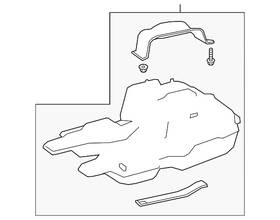
( Manufacturer Part Number: 463-470-18-02 ), ( Part Type: Fuel Tank ), ( Genuine Oem: Yes ), ( Manufacturer Warranty: 1 Year ), ( Fitment Type: Direct Replacement ), ( Parts Included: Only Part Reference 1 On The Diagram Is Included ), ( Replaces Part Number: 4634701202, 4634707601 )
Review MERCEDES benz Genuine Fuel Tank
The **Mercedes-Benz 463-470-18-02 fuel tank** is a high-performance, precision-engineered component designed exclusively for select Mercedes-Benz vehicles, ensuring optimal fuel delivery and system reliability. Manufactured to the exacting standards of the original equipment manufacturer (OEM), this fuel tank is crafted from durable, corrosion-resistant materials, including high-grade steel and reinforced plastic, to withstand the demands of daily driving, high-speed travel, and varying environmental conditions. Its sleek, aerodynamic design not only enhances the vehicle s overall aesthetics but also minimizes drag, contributing to improved fuel efficiency and performance. The tank features a robust internal structure with strategically placed baffles and mounting points, which prevent excessive sloshing and fuel surging during sharp turns, acceleration, or braking, thereby maintaining a steady fuel supply to the engine and reducing the risk of fuel starvation.
This fuel tank is engineered with a **dual-chamber system**, incorporating a primary fuel reservoir and an integrated fuel pump housing, which houses the electric fuel pump, fuel filter, and sensor components. The integrated design ensures a compact, streamlined installation that aligns perfectly with the vehicle s underbody, eliminating the need for additional brackets or supports. The fuel tank is equipped with a **high-flow fuel line connection**, allowing for efficient fuel transfer while minimizing pressure drops and ensuring consistent engine performance. Additionally, the tank includes a **vapor recovery system**, which helps reduce harmful emissions by capturing and recirculating fuel vapors back into the tank, adhering to stringent environmental regulations.
For enhanced safety and longevity, the **463-470-18-02 fuel tank** is fitted with a **reinforced fuel cap** that features a secure locking mechanism, preventing accidental dislodgment and potential fuel spills. The cap is designed to seal tightly, maintaining optimal fuel vapor pressure and reducing the risk of leaks or contamination. The tank s exterior is treated with a protective coating to guard against rust, corrosion, and abrasion, ensuring durability even in harsh conditions. Whether installed in a classic Mercedes-Benz model or a modern high-performance variant, this fuel tank delivers uncompromising reliability, performance, and compatibility, making it an essential upgrade for enthusiasts seeking to restore or enhance their vehicle s original functionality.
Compatibility extends to a range of Mercedes-Benz models, including but not limited to certain **E-Class (W211, W212), C-Class (W203, W204), S-Class (W220, W221), and SL-Class (R230, R231)** vehicles, as well as select **AMG and Maybach** variants. The **463-470-18-02** is a direct-fit replacement, ensuring seamless integration with the vehicle s fuel system, wiring harness, and mounting points without the need for modifications. Its precise engineering and adherence to OEM specifications make it an ideal choice for both restoration projects and routine maintenance, providing drivers with confidence in their vehicle s fuel efficiency, power delivery, and long-term reliability.
### **Pros and Cons of Buying a Mercedes-Benz 463-470-18-02 Fuel Tank**
The **Mercedes-Benz 463-470-18-02** is a fuel tank commonly used in older Mercedes-Benz vehicles, particularly models from the 1980s and 1990s (such as the W123, W124, and W140 series). Below is a detailed analysis of its advantages and disadvantages.
---
### **Pros**
1. **Compatibility with Classic Mercedes Models**
- This fuel tank is designed specifically for certain Mercedes-Benz vehicles, ensuring an exact fit without modification. It is commonly used in:- **W123 (1975 1991)** 240D, 250D, 280E, 300D, etc.
- **W124 (1984 2000)** 190E, 200D, 300E, etc.
- **W140 (1984 1997)** 420SE, 500SE, etc.
- Aftermarket parts may not match as precisely, reducing the risk of leaks or improper installation.
2. **High-Quality Material and Durability**
- Mercedes-Benz fuel tanks from this era were typically made from **stainless steel or heavy-duty plastic**, which are more resistant to corrosion and punctures compared to cheaper aftermarket alternatives.
- The construction is robust, reducing the likelihood of early failure.
3. **OEM (Original Equipment Manufacturer) Standards**
- Being an original or genuine replacement part, it adheres to Mercedes-Benz engineering standards, ensuring proper fuel flow, pressure regulation, and compatibility with the vehicle s fuel system.
- No risk of compatibility issues with non-OEM parts that may not meet the same specifications.
4. **Long-Term Reliability**
- Many classic Mercedes owners report that OEM fuel tanks last **15 20 years or more** with proper maintenance, especially if the vehicle is well-preserved.
- Unlike some aftermarket tanks that may develop cracks or leaks sooner, this part is built to last.
5. **Easier Maintenance and Repairs**
- Since it is a standard component, mechanics familiar with classic Mercedes will be more comfortable working with it.
- Replacement of the tank or related components (such as the fuel pump or sender unit) is straightforward.
6. **Resale Value for Classic Cars**
- If you plan to keep or sell the vehicle later, an OEM fuel tank adds to its authenticity and value in the classic car market.
- Buyers of restored or original-condition Mercedes often prioritize genuine parts.
7. **Fuel System Integrity**
- The tank s design may include features like **vapor recovery systems** (in later models) or proper venting, which contribute to better fuel efficiency and reduced emissions compared to poorly designed aftermarket alternatives.
---
### **Cons**
1. **High Cost Compared to Aftermarket Options**
- OEM fuel tanks are significantly more expensive than generic aftermarket replacements. Prices can range from **$300 to $800 **, depending on availability and condition.
- For budget-conscious buyers, this may be a major drawback, especially if the tank is only one of many needed parts for a restoration.
2. **Potential for Counterfeit or Low-Quality OEM Parts**
- Some sellers may offer "OEM" tanks that are actually **reconditioned or remanufactured** rather than brand-new. These may have hidden issues like weak seams or degraded material.
- Always verify the **part s authenticity** (e.g., check for Mercedes-Benz logos, serial numbers, and seller reputation).
3. **Limited Availability and Lead Times**
- Unlike mass-produced modern vehicles, classic Mercedes parts can be **hard to find**, especially if the tank is discontinued.
- Some sellers may take **weeks or months** to source the part, delaying repairs.
- Online marketplaces (eBay, specialty forums) or junkyards may have limited stock.
4. **Weight and Installation Challenges**
- Stainless steel tanks are **heavier** than plastic alternatives, which can make installation more difficult, especially in tight engine bays.
- Some classic Mercedes models may require **modifications to wiring, mounting brackets, or fuel lines** to accommodate the tank properly.
5. **Risk of Hidden Damage**
- Used OEM tanks may have **internal corrosion, punctures, or cracks** that are not immediately visible. A thorough inspection (or ultrasonic testing) is recommended before purchase.
- Some sellers may not disclose past damage, leading to unexpected repair costs.
6. **Environmental and Fuel Compatibility Concerns**
- Older fuel tanks were designed for **lead-based gasoline**, which is no longer used. While modern fuel is less corrosive, some owners report **plastic degradation** in tanks exposed to ethanol-blended fuels over time.
- If the tank has been stored improperly (e.g., with residual fuel left inside), it may develop **mold or bacterial growth**, requiring cleaning before use.
7. **Potential for Overpaying**
- In the classic car market, demand for OEM parts can drive up prices, especially for rare or high-demand models.
- Buyers must research **fair market value** to avoid overpaying for a tank that may not be in perfect condition.
---
### **Conclusion**
The **Mercedes-Benz 463-470-18-02 fuel tank** is a **high-quality, reliable, and long-lasting** component when properly sourced and installed. It is the **best choice for owners seeking authenticity, durability, and compatibility** with classic Mercedes models. However, its **high cost, potential availability issues, and the risk of counterfeit or damaged parts** make it a less ideal option for budget-conscious buyers or those restoring vehicles on a tight timeline.
For **restoration projects where authenticity and long-term reliability are priorities**, the OEM tank is strongly recommended. For **casual drivers or those on a budget**, a **high-quality aftermarket alternative** (from reputable brands like **Bendix, Delphi, or ACDelco**) may offer a cost-effective solution, provided it meets the same specifications.
---
### **Recommendation**
1. **If restoring a classic Mercedes for long-term ownership or resale:**- **Purchase a new or reconditioned OEM tank** from a trusted dealer (e.g., **Mercedes-Benz Parts Specialists, Classic Mercedes dealers, or authorized service centers**).
- **Inspect the tank thoroughly** (look for rust, dents, or weak seams) and consider **ultrasonic testing** if buying used.
- **Verify the part number** (463-470-18-02) matches your vehicle s exact requirements.
2. **If on a budget or restoring a project car:**- **Compare aftermarket options** from brands with strong reputations (e.g., **Bendix Knee Action, Delphi, or ACDelco**).
- **Check for compatibility** with your specific model year and engine configuration.
- **Consider a used OEM tank** from a trusted seller (e.g., **Junkyard, eBay with verified feedback, or classic car forums**) if the price is significantly lower than new.
3. **Always:**- **Test the tank for leaks** before installation (e.g., pressure test with water).
- **Replace related components** (fuel pump, sender unit, fuel lines) if they show signs of wear.
- **Follow Mercedes-Benz service manuals** for proper installation to avoid future issues.
Ultimately, the **best choice depends on your priorities whether it s authenticity, cost savings, or a balance of both.** For the most reliable and long-term solution, the OEM tank remains the **preferred option** for classic Mercedes enthusiasts.
Details:
Parts must be resalable and in the original packaging. Shipping Carrier substitutions may be made at our determination in an attempt to reduce shipping cost the customer. Electrical parts are not returnable.
part #: 4634701802 price
- $2606.37
specifications fueltanksysteme:
- for makes: Mercedes
- mpn: 463-470-18-02
- part type: Fuel Tank
- genuine oem: Yes
- manufacturer warranty: 1 Year
- fitment type: Direct Replacement
- parts included: Only Part Reference 1 On The Diagram Is Included
- replaces part number: 4634701202, 4634707601
offer fueltanksysteme:
- availability: In Stock
- quantity: 1
- sold: 0
- options: Ship-to-home
- started: March 6, 2026
seller fueltanksysteme:
- rating: 99.4%
- # reviews: 172
- city: Greenwich, Connecticut
payments fueltanksysteme:
- wallet: Paypal
- credit card: Mastercard
- other
general fueltanksysteme:
- condition: New
- Car Truck Parts Accessories > Air Fuel Delivery > Fuel Tanks Filler Necks
shipping fueltanksysteme:
- transit: 4-10 Days
- cost: $9.95
- class: Standard
- type: Fixed
- service: Standard
returns fueltanksysteme:
- policy: Returns Accepted
- paid by: Seller
- time: 30 Days
Mercedes 463-470-18-02 Is Similar To:
- 1078003175 Mercedes Benz Oe Vacuum Pump Central Locking System Price Lowered (28.1% similar) New and unused, genuine mercedes benz vacuum element. Mercedes a central locking system...(March 6th, 2018)
- 110-471-08-22 Mercedes Gas Tank Reinforcement (42.3% similar) Mb part number. New mercedes reinforcement along rear gas tank seam for mounting to body, used on 230SL 250SL 280SL 300SE...(October 22nd, 2018)
- 1105421204 Vdo Mercedes Sl Se Fuel Gas Tank Sending Unit (41.7% similar) All others please with zip code for shipping quote. For sale is a used fuel tank sending unit that was removed from 1971 mercedes 280 SL 113 chassis but will also work on other year and model 108CH, 114CH 113CH with same plug configuration as shown in the pictures...(September 10th, 2018)
- 1144700101 Mercedes Oem Fuel Tank (54.3% similar) This tank will fit all 114 and 115 chassis vehicles. This item currently list for 1,520. The mb part number is. This item is used with a 90 day warranty. Mercedes oem fuel tank. This tank as zero rust inside...(October 10th, 2018)
- 123 584 00 39 1235840039 Mercedes Sedan Fuel Tank Door Lid Red Burgundy Factory Oem (33.3% similar) All electrical and electronic parts are tested guaranteed. Free shipping is for the 48 contiguous states...(September 29th, 2018)
- 1234700189 Mercedes Steel Fuel Expansion Tank Diesel Wagon (44.4% similar) It is in good overall condition and works perfectly. Not compatible with W123 coupe sedan model's. Diesel steel fuel expansion tank for W123 wagon model's I am selling an oem mercedes original tank for only. Halo ESP ol...(February 16th, 2019)
- 124-470-00-05 Genuine Mercedes Fuel Tank Gas Cap Filler (61.4% similar) Brand new genuine mercedes fuel tank gas cap filler R107 W108 W109 W114. Condition is new...(March 24th, 2019)
- 1294700664 Genuine Mercedes New Fuel Tank Line For (58.7% similar) Mercedes-benz 190E or for a quick response. Mercedes-benz 300E 600SEL S320 300CE 190E 124. Mercedes-benz 400SE 300SE SL320 600SEC S420 S600 500SL 190E 500E S320 CL600 140. Mercedes-benz E500 600SL S500 400SEL if you live outside of the USA please research and verify it fits your vehicle before ...(May 31st, 2019)
- 137 33039 001 Wd Express Fuel Line Left Fits Mercedes 884109112242 (28.8% similar) It is this experience and vendor relationships that brings to you. We dedicate ourselves to giving you the service and care that expect reminds come see us again...(June 16th, 2018)
- 164-470-03-30 Genuine Mercedes Fuel Filler Gas Cap Tank Cover Oem (54.8% similar) Genuine mercedes fuel filler gas cap tank cover oem condition: new brand: mercedes-benz mpn: warranty: lifetime manufacturer part number: fitment type: direct replacement other to ensure proper please enter vehicles year, make and model in the parts compatibility above. Read all notes and compare ...(December 17th, 2018)
- 1644700530 Mercedes Oem Fuel Filler Hose (42.4% similar) ...(July 26th, 2018)
